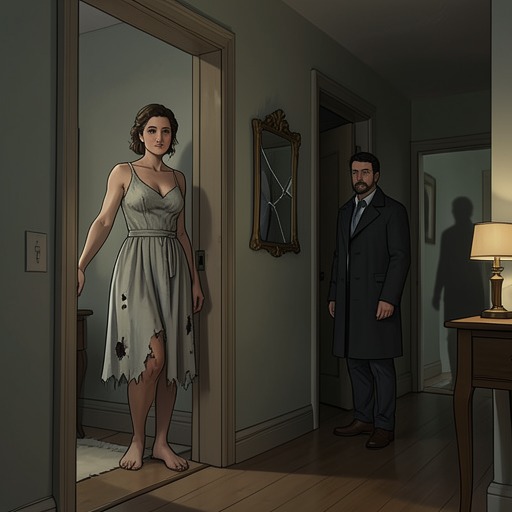
Ren reveals the destined partner relationship between the two
My Dark Mate: A Rejected Mate Werewolf Shifter RomanceRen’s revelation that she and Caleb are fated mates is the decisive reversal in their relationship: an intimate encounter produces an involuntary mating bite, and Ren is forced to name the bond that Caleb has refused to acknowledge. The moment changes their connection from concealed love and physical closeness into an openly contested question of identity, consent, belonging, and emotional survival.
Causes and Hidden Knowledge
Ren has known for some time that her wolf recognizes Caleb as her mate, but she initially interprets her feelings as love and tries to keep the truth unspoken. The pressure becomes harder to contain during her heat, when she loses control and feels her wolf taking over. She is relieved when Caleb leaves for a week to avoid being present during that period, believing she might manage the danger if the heat passes; instead, the wolf remains insistent.
The revelation therefore emerges from a conflict between Ren’s conscious restraint and her animal nature’s certainty. Ren explains to Trey that she had tried to ignore the bond because she feared Caleb’s response and did not want to impose a relationship he did not choose. Her account makes the disclosure less a calculated declaration than the belated release of knowledge she has carried alone. The bond is already emotionally consequential before Caleb accepts it: Ren loves him, wants him, and experiences resistance to the connection as a physical and psychological fracture.
The Bite and the Disclosure
During sex, Ren’s wolf finally refuses further restraint. The bite is not planned by Ren’s conscious self; her wolf wants her mate and claims Caleb before Ren can stop it. Caleb experiences the bite as an abrupt violation of the fragile peace he had been maintaining. The intensity of the climax is immediately replaced by shock, distance, and anger when he realizes that Ren’s teeth have marked his shoulder.
Ren apologizes, insists that she did not mean for it to happen, and then explains why it happened. She tells Caleb that her wolf knows they are fated, revealing not only the existence of the bond but also the fact that Ren has been aware of it while trying not to tell him. Her confession joins love, bodily compulsion, and secret knowledge in one unstable moment: she loves Caleb, but she has also been struggling against an instinct that no longer permits silence.
Caleb responds with emphatic denial. Rather than treating the bite as confirmation, he turns away from Ren, leaving her cries behind him while his own roars of refusal define the immediate aftermath. The value of the encounter shifts sharply from intimacy to rejection. What Ren hoped might become recognition instead becomes evidence, in her mind, that Caleb does not want her.
Rejection and Emotional Consequences
Ren carries the disclosure to Trey, describing the experience as worse than ordinary heartbreak. She feels as though she is breaking apart, not simply because Caleb is angry, but because his response appears to reject the bond and everything she has risked by naming it. Her shame is intensified by the contrast between her intention and the result: she tried to protect Caleb from an unwanted truth, yet the truth emerged through an act he experiences as an assault on his autonomy.
The event also reactivates Ren’s history with Shane Sheppard. Caleb’s disgusted and betrayed expression recalls the anger that preceded violence in her marriage, even though Ren knows Caleb would not hurt her in the same way. The comparison shows how the fated bond is filtered through trauma rather than received as uncomplicated romance. Caleb’s rejection becomes another form of danger because it touches Ren’s fear of being unwanted, blamed, or abandoned after surrendering trust.
Ren’s broader trauma is already organized around bodily panic, pursuit, and self-blame. She has intrusive memories of Shane Sheppard’s death, wakes from nightmares, fears storms, and repeatedly experiences running as a survival response. Against that background, the mating revelation does not erase her past; it places a new bodily imperative beside it. The wolf’s certainty promises belonging, while Caleb’s refusal threatens to reproduce the old pattern of being trapped in a relationship where Ren’s needs are treated as a problem.
Recognition and Formal Claiming
The rejection does not remain final. Caleb eventually returns to Ren and approaches her with a transformed physical presence: both eyes are golden and glowing, signaling the emergence of his wolf. He kisses her with raw force, then bites her shoulder without gentleness. Unlike the earlier bite, which Ren’s wolf inflicted before conscious agreement could intervene, Caleb’s act functions as a deliberate reciprocal claiming and marks the beginning of his acceptance of the bond.
That later bite changes the meaning of the original disclosure. Ren’s revelation first exposes a relationship Caleb denies; Caleb’s answering mark converts the hidden bond into a mutual one. The transition is not presented as calm negotiation. Pain and pleasure remain inseparable, and the intensity of the marking emphasizes that recognition is embodied before it becomes socially secure. Yet the act also moves the couple from a private asymmetry—Ren knows and Caleb rejects—to a relationship in which Caleb publicly and physically acknowledges Ren as his mate.
The bond’s social meaning develops further through Lacy Baneblood’s final conversation with Ren and Caleb. Near death, Lacy is relieved that Ren is safe and that Caleb is caring for her. Caleb vows to protect Ren from her family, and Lacy declares that she can leave peacefully because Ren is no longer alone. Her blessing places the fated relationship within a wider network of family protection and farewell, turning Caleb’s role from reluctant partner into the person entrusted with Ren’s future.
From Bond to Belonging
The revelation is ultimately absorbed into a larger reconciliation. Ren later confronts Caleb over his repeated rejection, his habit of leaving when she is in heat, and his refusal to see what she wants. She tells him that she does not require the world or grand possessions; she wants love and a family. Her demand gives the fated bond an ethical and emotional measure beyond instinct: being mates is insufficient unless Caleb chooses to remain, recognize her, and build a life with her.
Ren’s history makes that demand costly. She has lost a baby, lost herself with Shane Sheppard, nearly lost her life after being accused over Shane Sheppard’s death, and nevertheless continued to present courage and hope. Her insistence that she never gave up frames the mating revelation as part of a longer struggle to reclaim agency. She is not merely waiting for destiny to solve her life; she is asking Caleb to stop fleeing and meet her in the life the bond makes possible.
The later formal mating ceremony and marriage give the relationship public and legal recognition. Ren is not only Caleb’s fated mate but his wife, and the ceremony gives her a new name and a place within the community. Caleb’s insistence on marriage so that the human world would record her new name links supernatural claiming with ordinary social documentation. What began as a secret known only to Ren’s wolf becomes a publicly witnessed identity.
The final emotional consequence is belonging. Ren says that Caleb is not merely mating and marrying her; he is giving her something she did not know she needed. His love, rather than the biological fact of being fated, is what makes the outcome complete. The ceremony includes the wider community, Cole Chase, Trey Chase, and the Sheppard brothers, while Caleb’s laughter and protective complicity show how rejection has been replaced by attachment. Ren’s pregnancy and the six-month gestation of a shifter baby extend that belonging into family continuity, even as the hormonal intensity of pregnancy prompts Caleb to lock away the guns after Ren once tries to shoot him.
Narrative Significance
The event is the story’s central recognition crisis because it makes the invisible bond speak through the body before the characters are emotionally prepared to accept it. Ren’s wolf knows first, Ren confesses under pressure, Caleb rejects the knowledge, and Caleb later enacts acceptance through his own mating bite. The sequence turns destiny into an argument rather than a gift: the relationship must pass through fear, trauma, anger, and the possibility of abandonment before it can become chosen commitment.
Its structure also contrasts two kinds of survival. Ren survives Shane Sheppard’s pursuit and death by refusing to accept blame for his choice to attack her, yet she remains haunted by the event in storms, nightmares, and bodily panic. In the fated-mate conflict, she must similarly defend the legitimacy of her desires without surrendering responsibility for her own actions. Caleb’s eventual acceptance matters because it restores not only the bond but Ren’s sense that love can coexist with safety, family, and a future.
The revelation therefore changes the story’s governing question. At first, the issue is whether Ren and Caleb are fated; by the end, that fact is no longer in doubt. The deeper issue is whether a bond imposed by instinct can become a relationship sustained by mutual love and public belonging. The formal ceremony answers yes, but only after Caleb learns that loving Ren requires more than desire or protective force: it requires staying, acknowledging her, and choosing the life their bond has opened.